Getting consistent visitors to your website is important for building brand awareness, generating leads, and increasing sales. However, simply publishing a website is not enough. You need a proper SEO and content strategy to attract the right audience. If you are wondering how to increase website traffic, the answer starts with creating useful content, targeting relevant keywords, improving your website experience, and consistently monitoring your performance.
Businesses can also explore professional digital marketing services to support their SEO, content, website, and online visibility efforts.
In this guide, you will learn 10 practical strategies that can help you attract more visitors and build sustainable organic traffic in 2026.
Why Is Website Traffic Important?
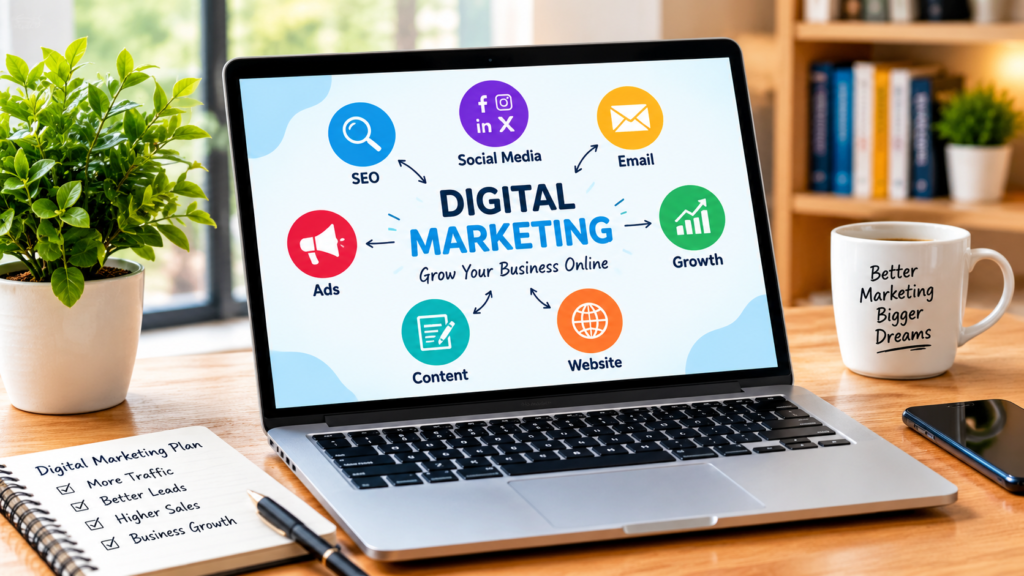
Website traffic refers to the number of people who visit your website. More relevant visitors can create more opportunities for leads, sales, enquiries, and brand growth.
However, traffic quality is just as important as traffic volume. Getting visitors who are genuinely interested in your products or services can produce better results than attracting random users.
A well-planned SEO strategy can help your website appear in search results when potential customers are looking for information, products, or services related to your business.
10 Ways to Increase Website Traffic
1. Create Useful Content
High-quality content is one of the most effective ways to attract visitors. If you want to learn How to Increase Website Traffic, start by creating articles, guides, tutorials, FAQs, and other useful resources that solve real problems for your target audience.
Before writing, understand what your audience wants to know. Your content should provide useful and relevant information instead of simply adding keywords to a page.
Consistently publishing valuable content can help your website attract more visitors from search engines and encourage users to explore other pages on your website.
2. Perform Keyword Research
Keyword research helps you understand what people search for on Google and other search engines. Find relevant keywords that match your audience’s needs and search intent.
Instead of targeting only highly competitive keywords, include long-tail keywords that are more specific and closely related to your products or services.
A strong SEO keyword strategy can help you organize your topics, target relevant searches, and create content around the questions your audience is actually asking.
3. Improve On-Page SEO
On-page SEO involves optimizing different elements within your website and is an important part of learning How to Increase Website Traffic. Use your target keyword naturally in important areas such as the title, headings, introduction, URL, and relevant sections.
You should also optimize meta titles, meta descriptions, images, internal links, and content structure. These improvements can make your pages easier for search engines to understand and provide a better experience for visitors.
Avoid keyword stuffing when applying How to Increase Website Traffic strategies. Search engines and users both benefit from content that reads naturally, answers search intent, and provides genuine value.
4. Build Internal Links
Internal links connect one page of your website to another. They help visitors discover related content and make it easier for search engines to understand the structure of your website.
For example, if you are discussing SEO performance, you can naturally add an internal link using the anchor text How to Track SEO Rankings.
You can also link relevant content to your website’s homepage when it helps readers discover additional digital marketing information or services.
Use internal links where they are genuinely useful to readers rather than adding links unnecessarily.
5. Improve Website Speed

A slow website can create a poor user experience. Visitors may leave before your content loads, which can reduce engagement and potential conversions.
Optimize large images, remove unnecessary plugins or scripts, use efficient hosting, and keep your website technically clean.
Regularly test your website speed and identify pages that need improvement.
6. Optimize for Mobile
Many people access websites through smartphones. Therefore, your website should work properly on different screen sizes.
Make sure text is easy to read, buttons are easy to click, navigation is simple, and important content loads properly on mobile devices.
A mobile-friendly website provides a better experience and can support your overall SEO efforts.
7. Use Social Media

Social media can help you distribute your content and reach people who may not discover your website through search engines.
Share your blog posts, guides, videos, case studies, and useful tips on platforms where your target audience is active.
Social media can also bring referral traffic and help increase awareness of your brand.
8. Build Quality Backlinks
Backlinks are links from other websites to your website. Relevant, trustworthy backlinks can support your website’s authority and help people discover your content.
For link-building, focus on relevant websites and useful content instead of exchanging links randomly.
Guest posting, digital PR, resource pages, and genuine partnerships can be useful approaches. Always prioritize relevance and quality when building backlinks.
9. Update Old Content
Old articles can lose traffic when information becomes outdated or competitors publish better content.
Review your existing articles regularly. Update statistics, examples, screenshots, links, headings, and outdated information.
You can also add new sections based on current search trends and questions from your audience. Updating useful content can help maintain its value and improve its search visibility.
10. Track SEO Performance

SEO requires regular monitoring because rankings and traffic can change over time. Track important metrics such as organic traffic, keyword positions, clicks, impressions, and conversions.
If a page loses traffic, investigate possible reasons such as outdated content, technical problems, changing search intent, or increased competition.
Using an SEO tracking process helps you understand what is working and where improvements are needed.
How Long Does It Take to Increase Website Traffic?

If you are wondering how to increase website traffic, it is important to understand that SEO results do not usually happen overnight. The time required to see noticeable results depends on factors such as website authority, competition, content quality, technical SEO, backlinks, and publishing consistency.
Some improvements may produce results relatively quickly, while organic SEO growth often requires consistent work over several months. A new website may take longer to build visibility compared with an established website with existing authority.
To understand how to increase website traffic successfully, focus on creating valuable content, improving existing pages, targeting relevant keywords, building quality backlinks, and monitoring your SEO performance regularly. Consistent optimization and patience are important for achieving sustainable traffic growth.
Frequently Asked Questions

1. How to increase website traffic organically?
You can increase organic traffic by creating useful content, performing keyword research, improving on-page SEO, building quality backlinks, and regularly updating your website.
2. Does SEO help increase website traffic?
Yes. SEO can help your pages appear for relevant searches, allowing potential visitors to discover your website through search engines.
3. How often should I publish new content?
There is no fixed number that works for every website. Focus on publishing useful, original content consistently rather than publishing low-quality articles frequently.
4. Are backlinks important for website traffic?
Relevant backlinks can help users discover your website and may support your SEO efforts. Quality and relevance are more important than simply collecting a large number of links.
5. Can social media increase website traffic?
Yes. Sharing useful website content on social media can generate referral traffic and help your content reach a wider audience.
Conclusion
Learning how to increase website traffic requires a combination of content, SEO, technical improvements, link building, and consistent performance tracking. Start by creating useful content and targeting relevant keywords, then improve your website’s speed, mobile experience, internal linking, and backlink profile.
Most importantly, keep measuring your results and update your strategy based on actual performance. With consistent effort and a user-focused approach, your website can build a stronger foundation for sustainable organic traffic in 2026.