Digital marketing has become an important part of modern business growth. Businesses of different sizes use online channels to connect with customers, build visibility, share information, and promote their products or services. Understanding the 5 benefits of digital marketing can help business owners decide which online strategies may be suitable for their goals.
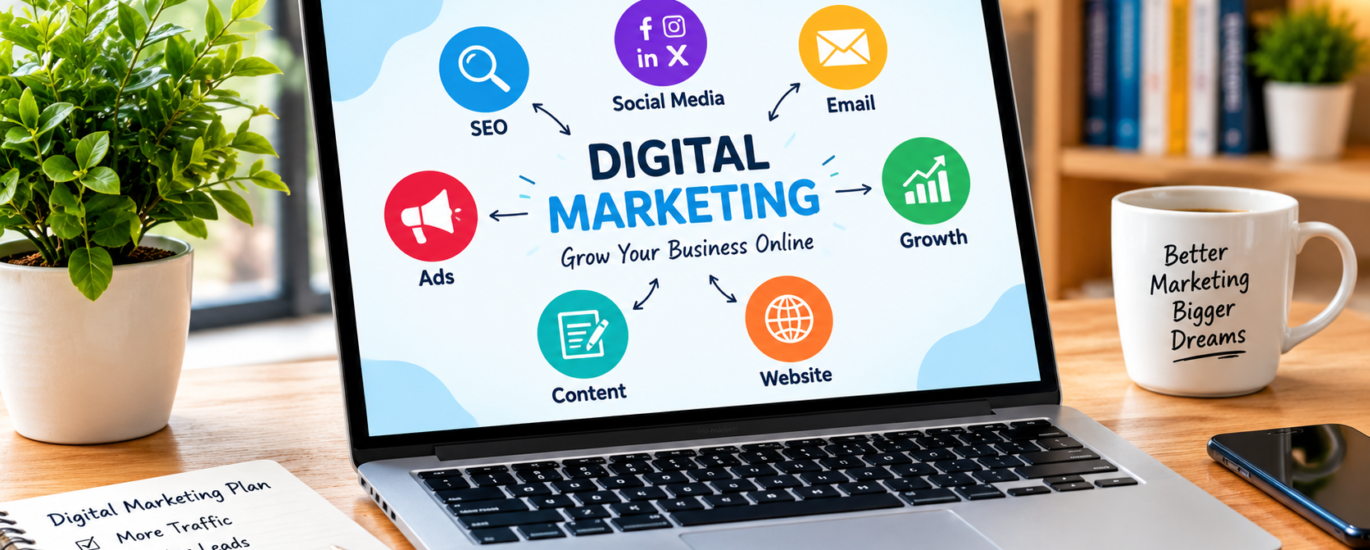
Digital marketing includes search engine optimization (SEO), content marketing, social media marketing, email marketing, paid advertising, local SEO, and website optimization. Each method can serve a different purpose depending on the business, target audience, industry, and marketing objectives.
What Are the 5 Benefits of Digital Marketing?

The 5 benefits of digital marketing can be understood by looking at how online channels help businesses reach people, communicate with audiences, measure results, manage different marketing options, and develop long-term visibility.
A business does not necessarily need to use every available platform. Instead, it can select the channels that are most relevant to its customers and goals.
1. Reach a Wider Audience
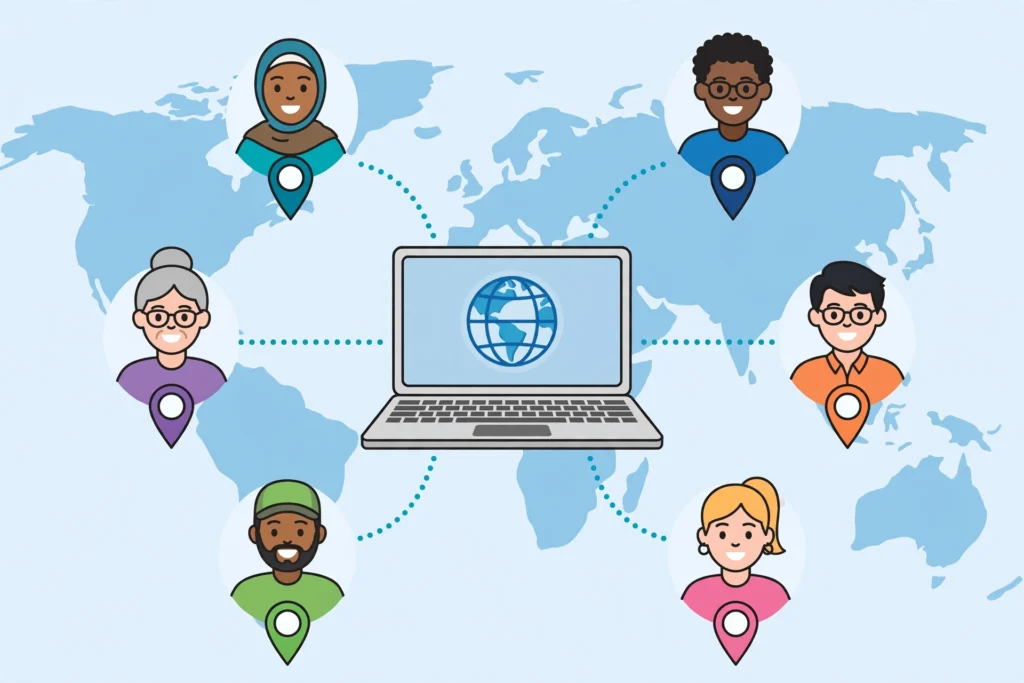
The first of the 5 benefits of digital marketing is the ability to reach a wider audience.
A business website can potentially be discovered by people searching for relevant products, services, or information from different locations. This can be especially useful for businesses that want to expand beyond their immediate local market.
For example, a local service provider can use local SEO to improve its visibility for searches in a particular area. An online store can use search optimization, social media, and advertising to reach customers across different cities or regions.
Online content can also remain available after publication. A useful article, guide, video, or service page may continue attracting visitors when it provides information that matches what people are searching for.
This gives businesses an opportunity to build visibility gradually instead of depending only on one-time promotional campaigns.
2. Better Audience Targeting
The second of the 5 benefits of digital marketing is the ability to reach more relevant audiences.
Digital advertising platforms can provide targeting options based on factors such as location, demographics, interests, and other available audience signals. SEO and content marketing can also attract people who are actively searching for specific information.
For example, a company providing website design services could publish articles about website costs, mobile-friendly design, website speed, and other topics that potential customers may search for.
Effective targeting is not simply about reaching the largest possible number of people. It is about reaching people who are relevant to the products, services, and objectives of the business.
Understanding the audience before creating a campaign can therefore make marketing communication more focused.
3. Easier Performance Measurement
Another important point among the 5 benefits of digital marketing is measurable performance.
Digital platforms provide different types of information that businesses can use to understand how their online activities are performing.
Depending on the platform, businesses may be able to monitor:
- Website visitors
- Search impressions
- Search clicks
- Click-through rate
- Social media engagement
- Leads
- Conversions
- Advertising performance
For example, Google Search Console provides information about how websites perform in Google Search, including impressions, clicks, and search queries.
Businesses can also use analytics tools to understand how visitors interact with important pages on their websites.
This data can help identify which content attracts attention and where improvements may be necessary. Instead of making every marketing decision based only on assumptions, businesses can use available performance information to refine their strategies.
4. Flexible Marketing Options
The fourth point among the 5 benefits of digital marketing is flexibility.
Businesses can choose from different online marketing methods according to their goals, audience, resources, and budget.
For example, a business may use:
- SEO for organic search visibility
- Content marketing for educational resources
- Social media for audience communication
- Paid advertising for targeted campaigns
- Email marketing for customer communication
- Local SEO for location-based searches
A small local business may begin with a website, local search optimization, and useful content. An e-commerce company may combine SEO, paid advertising, social media, and email marketing.
There is no single strategy that works exactly the same way for every business. Competition, audience behavior, industry, location, resources, and objectives can all influence the appropriate marketing approach.
The flexibility of online channels allows businesses to start with suitable activities and expand their strategy as their needs change.
5. Builds Long-Term Online Visibility
The fifth of the 5 benefits of digital marketing is the opportunity to develop long-term online visibility.
Some online marketing activities can continue providing value after the initial work has been completed. For example, a useful blog article can continue attracting visitors from search engines when it remains relevant and properly maintained.
Similarly, an optimized service page can provide information to potential customers whenever they search for related services.
SEO and content marketing generally require consistency. Businesses may need to publish useful content, improve existing pages, update outdated information, and monitor changes in audience behavior.
This means online marketing should usually be treated as an ongoing process rather than a one-time activity.
How Digital Marketing Supports Business Growth
The 5 benefits of digital marketing are connected to several important business activities.
A strong website can provide customers with information about products and services. Search optimization can help relevant pages become easier to discover. Social media can provide another communication channel, while paid advertising can help businesses promote specific offers or campaigns.
However, businesses should not assume that every online activity will produce immediate results. Performance can vary depending on competition, industry, audience, website quality, budget, content quality, and consistency.
For this reason, businesses should set realistic objectives and review their performance regularly.
Digital Marketing and SEO
SEO is one of the major areas of digital marketing. It focuses on improving a website’s visibility in unpaid search results.
SEO activities can include:
- Keyword research
- Content optimization
- Internal linking
- Technical SEO
- Image optimization
- Website structure improvements
- Local SEO
Google’s official SEO Starter Guide explains fundamental SEO concepts and provides guidance for website owners.
Content should be created primarily for people and should provide useful information. Keywords can help search engines understand a page, but they should be used naturally rather than repeated unnecessarily.
How to Start Using Digital Marketing
After understanding the 5 benefits of digital marketing, a business can begin by creating a simple plan.
Step 1: Define Your Marketing Goal
First, decide what you want to achieve. Your goal might be increasing website visitors, generating enquiries, improving brand awareness, increasing sales, or reaching customers in a particular location.
Step 2: Understand Your Audience
Identify your potential customers and understand their problems, questions, needs, and online behavior.
Step 3: Select Suitable Channels
Choose channels that match your audience and objectives. You may start with SEO, content marketing, social media, email marketing, or paid advertising.
Step 4: Create Useful Content
Create articles, guides, FAQs, videos, service pages, and other resources that answer genuine customer questions.
Step 5: Measure and Improve
Track relevant performance metrics and use the information to identify areas for improvement.
Internal Link Placement:
Add your one internal link naturally after this sentence:
“For beginners, creating a simple plan can make online marketing easier to understand and manage.”
Use anchor text:
how to start digital marketing
Link this anchor to your article “How to Start Digital Marketing: A Beginner’s Complete Guide.”
Why Digital Marketing Matters for Small Businesses
The 5 benefits of digital marketing can also be useful for small businesses that are building their online presence.
A small business can create a professional website, publish helpful content, improve its local search visibility, maintain relevant social media profiles, and explore paid advertising when appropriate.
Local businesses can particularly benefit from making their services, location, contact information, and business details easy to find online.
The important point is to start with realistic goals instead of trying to manage every platform simultaneously.
Common Mistakes to Avoid

Businesses should also understand some common mistakes when developing an online marketing strategy.
These include:
- Creating content without understanding the audience
- Repeating keywords unnaturally
- Ignoring mobile users
- Publishing low-quality content
- Focusing only on website traffic
- Not measuring performance
- Expecting immediate SEO results
- Using unrelated marketing channels
Google also warns against keyword stuffing, which involves repeating keywords unnaturally in an attempt to manipulate search results.
A better approach is to create useful, relevant content and use important terms naturally where they make sense.
Conclusion
The 5 benefits of digital marketing include reaching a wider audience, targeting relevant users, measuring performance, having flexible marketing options, and building long-term online visibility.
Digital marketing is a broad field that includes SEO, content marketing, social media marketing, email marketing, paid advertising, and local SEO. Businesses can select the methods that best match their audience and objectives.
The 5 benefits of digital marketing become more useful when businesses combine online activities with clear goals, audience research, useful content, suitable channels, and regular performance tracking.
A practical strategy does not require using every digital platform. Businesses can start with the channels that are most relevant to them and gradually improve their approach using real performance data.