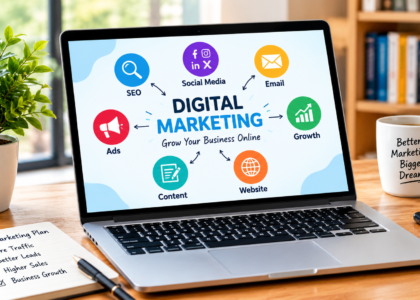
Digital marketing has become an important way for businesses to build an online presence, reach potential customers, share useful information, and promote products or services. However, getting started can feel confusing because digital marketing includes several areas such as SEO, content marketing, social media marketing, email marketing, paid advertising, and local SEO.
For someone who is completely new to online marketing, the best approach is to understand the basics first and then gradually build a practical strategy. You do not need to use every marketing channel at the same time. Instead, focus on the methods that match your business, audience, goals, and available resources.
This guide explains practical digital marketing tips for beginners and provides a simple starting point for building a stronger online presence.
What Is Digital Marketing?
Digital marketing means promoting a business, product, service, or brand through digital channels. These channels can include search engines, websites, social media platforms, email, online advertising, and other digital platforms.
The main purpose is to connect with relevant audiences and provide useful information about a business or its offerings.
Some common areas of digital marketing include:
- Search engine optimization (SEO)
- Content marketing
- Social media marketing
- Email marketing
- Pay-per-click advertising
- Local SEO
- Website marketing
Understanding these areas can help beginners decide which methods may be appropriate for their particular goals.
Why Is Digital Marketing Important for Beginners?
Before starting, it is useful to understand why businesses invest time in online marketing.
A business can use digital channels to improve online visibility, communicate with potential customers, distribute useful content, and generate enquiries or sales.
The benefits of digital marketing can vary depending on the business, audience, industry, competition, budget, and marketing strategy.
For example, SEO can help a website become easier to discover through search engines, while social media can provide another way to communicate with an audience. Content marketing can answer customer questions, and paid advertising can be used to promote specific campaigns.
The important point is that digital marketing should support clear business objectives rather than simply collecting website visitors or social media followers.
7 Digital Marketing Tips for Beginners
1. Define Your Marketing Goals
One of the most important digital marketing tips for beginners is to define clear goals before starting.
Think about what you actually want your marketing activities to achieve. Your goal could be:
- Increasing website traffic
- Generating enquiries
- Getting more leads
- Improving brand awareness
- Increasing online sales
- Reaching customers in a specific location
- Building an online audience
Different goals may require different approaches.
For example, a business that wants more organic search traffic may focus on SEO and content creation. A business promoting a limited-time offer may consider paid advertising.
Clear goals make it easier to select suitable marketing channels and measure progress.
2. Understand Your Target Audience
Another useful point among digital marketing tips for beginners is understanding your target audience.
Before creating content or launching a campaign, try to understand who your potential customers are and what they need.
Consider questions such as:
- Who are my potential customers?
- What problems are they trying to solve?
- What questions do they ask?
- What information are they searching for?
- Which online platforms do they use?
- What type of content do they prefer?
Audience research can help you create more relevant content and make your marketing communication more focused.
Instead of trying to reach everyone, identify the people who are most likely to be interested in what your business provides.
3. Build a Professional Website
A professional website can act as the central point of your digital presence.
Your website should clearly explain:
- What your business does
- Which products or services you offer
- Who you serve
- How visitors can contact you
- What information customers need before making a decision
The website should also be easy to navigate and work properly on mobile devices.
Important pages may include a homepage, service pages, about page, contact page, and useful educational content.
A website alone does not automatically generate traffic. It needs useful content, proper optimization, promotion, and ongoing maintenance.
4. Learn the Basics of SEO
Learning basic SEO is another important part of digital marketing tips for beginners.
SEO, or search engine optimization, involves improving website content and other elements so that search engines can better understand the pages and users can discover relevant information through search.
Beginners can start with:
- Keyword research
- Useful content creation
- Descriptive page titles
- Relevant headings
- Meta descriptions
- Internal linking
- Image optimization
- Mobile-friendly design
- Website performance
Google provides an official SEO Starter Guide that explains fundamental SEO concepts for website owners.
Do not try to learn every advanced SEO technique immediately. Start with the basics, apply them to your website, and gradually develop your knowledge.
5. Create Useful Content
Creating useful content is one of the most practical digital marketing tips for beginners.
Content can include:
- Blog posts
- Guides
- Tutorials
- FAQs
- Videos
- Checklists
- Infographics
- Service pages
Before creating an article, understand what your audience wants to learn. Your content should answer genuine questions and provide information that readers can actually use.
For example, a digital marketing agency could create beginner-friendly articles about SEO, keyword research, website traffic, content marketing, and social media.
Avoid creating articles simply to insert keywords. Search-focused content should still be written primarily for people.
6. Use Social Media Strategically
Social media can help businesses distribute content and communicate with their audience.
However, you do not need to create accounts on every platform.
A better approach is to identify where your target audience is active and focus on those platforms.
You can share:
- Educational tips
- Blog articles
- Short videos
- Industry information
- Frequently asked questions
- Product or service information
- Useful statistics
- Company updates
Social media should provide value rather than consist only of promotional posts.
For beginners, choosing one or two relevant platforms and maintaining them consistently may be easier than trying to manage many channels at once.
7. Track Your Marketing Performance
Tracking performance is one of the most important digital marketing tips for beginners because it helps you understand what is actually happening.
Depending on your goals, you can monitor:
- Website visitors
- Organic search traffic
- Search impressions
- Search clicks
- Leads
- Enquiries
- Conversions
- Social media engagement
- Advertising performance
Do not focus on every metric at the same time. Select measurements that directly relate to your business goals.
For example, if your main goal is generating enquiries, the number of website visits alone may not tell you whether your strategy is working.
How to Create a Simple Digital Marketing Strategy
After learning the basic digital marketing tips for beginners, you can create a simple strategy.
Step 1: Choose a Clear Goal
Decide what you want to achieve. Keep your initial goal specific and realistic.
Step 2: Research Your Audience
Understand your potential customers, their needs, questions, interests, and online behavior.
Step 3: Select Suitable Channels
Choose channels that match your audience and objectives. These could include SEO, content marketing, social media, email marketing, or paid advertising.
Step 4: Create Useful Content
Develop content that answers questions and provides genuine value to your audience.
Step 5: Promote Your Content
Share relevant content through appropriate channels where your audience can discover it.
Step 6: Measure the Results
Review relevant performance data and identify areas that need improvement.
Step 7: Improve Your Strategy
Use what you learn from your performance data to make future marketing activities more focused.
A simple strategy is usually easier to manage than trying to implement every available marketing technique immediately.
Internal Linking for Digital Marketing Content
Internal linking is another useful part of digital marketing tips for beginners.
Internal links connect related pages within the same website. They can help visitors discover additional information and make website navigation easier.
For example, while explaining why online marketing matters, you can naturally link readers to an article about the benefits of digital mark
Understanding the benefits of digital marketing can help beginners see how different online channels can support business goals.
Only add an internal link when the destination page is genuinely relevant to the information being discussed.
Common Digital Marketing Mistakes Beginners Should Avoid
Understanding common mistakes is also part of digital marketing tips for beginners.
Using Too Many Platforms
Trying to manage every social media platform can make it difficult to maintain quality and consistency.
Focusing Only on Traffic
Traffic is useful, but businesses should also consider enquiries, leads, conversions, engagement, and other relevant objectives.
Ignoring SEO
A website may contain useful information, but without proper optimization, potential customers may have difficulty discovering it through search engines.
Publishing Low-Quality Content
Publishing many articles does not automatically produce better results. Focus on useful, original, accurate, and relevant content.
Expecting Immediate Results
Some marketing activities can take time to produce noticeable results. SEO and content marketing often require consistent work and ongoing improvements.
Not Measuring Results
Without performance data, it becomes difficult to understand which activities are producing useful outcomes.
Digital Marketing Tips for Small Businesses
Small businesses can also use digital marketing tips for beginners to build a practical online presence without trying to implement every marketing method at once.
A small business can begin with:
- A clear and professional website
- Basic SEO
- Useful educational content
- Relevant social media profiles
- Local SEO when appropriate
- Simple performance tracking
- Regular website improvements
For a local business, it can be particularly useful to provide clear information about services, location, contact details, opening information, and frequently asked questions.
The strategy should be based on the type of business and the audience it wants to reach.
How Long Does Digital Marketing Take to Work?
There is no fixed timeline for digital marketing results.
The time required can depend on factors such as competition, website quality, content quality, industry, audience, budget, consistency, and the channels being used.
SEO and content marketing can require ongoing effort before significant organic growth becomes visible. Paid advertising may generate traffic more quickly, but its performance depends on factors such as targeting, budget, competition, advertisements, and landing pages.
One of the most useful digital marketing tips for beginners is to set realistic expectations and regularly review performance rather than expecting immediate results.
Frequently Asked Questions
Is digital marketing difficult for beginners?
Digital marketing has many different areas, but beginners can start with the fundamentals. Learning one topic at a time can make the process easier.
Which digital marketing channel should beginners learn first?
There is no single channel that is right for every business. Consider your audience, goals, industry, and available resources before choosing a channel.
Do I need a website for digital marketing?
A website can provide a central place where customers can learn about a business, its products or services, and contact information. The appropriate digital channels depend on the business and its objectives.
Can small businesses use digital marketing?
Yes. Small businesses can use SEO, content marketing, local SEO, social media, email marketing, and online advertising according to their needs and resources.
How can beginners improve their digital marketing knowledge?
Beginners can learn through reliable documentation, practical projects, educational articles, courses, and by testing strategies on their own websites.
Conclusion
These digital marketing tips for beginners provide a practical starting point for understanding online marketing.
Start by defining your goals, understanding your audience, creating a professional website, learning basic SEO, publishing useful content, choosing suitable social platforms, and measuring your performance.
You do not need to implement every strategy immediately. Begin with the methods that are most relevant to your business, learn from your results, and gradually improve your approach.
Digital marketing is an ongoing process. Consistency, useful content, audience understanding, and regular performance analysis can help you build a stronger foundation for long-term online growth.